
Medical Oxygen Equipment in Dhaka | Types, Uses & Buying Guide
Medical Oxygen Equipment helps patients receive supplemental oxygen at home when recommended by a healthcare professional. From medical oxygen cylinders to oxygen concentrators, regulators, flow meters, and masks, each product has a specific purpose. Choosing the right equipment depends on the patient’s oxygen requirements, home environment, and care plan.
In Bangladesh, many families look for suitable oxygen equipment when caring for elderly people, patients recovering after hospital treatment, or individuals with breathing difficulties. However, buying medical equipment without understanding its features can lead to the wrong choice. Therefore, it is important to learn about the available options before ordering.
This guide explains the main types of medical oxygen equipment, their uses, important features, and safety considerations for home care.
What Is Medical Oxygen Equipment?
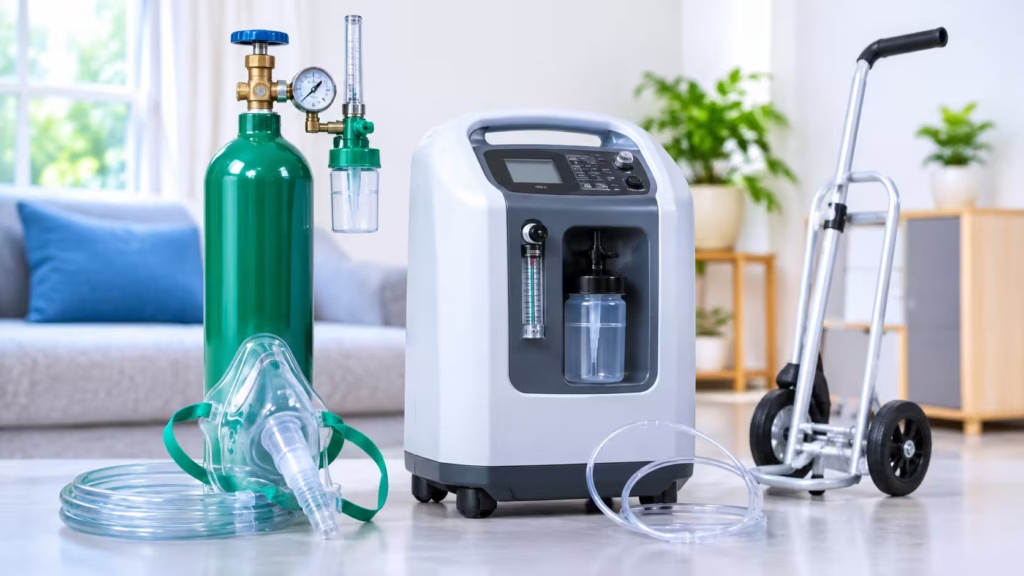
Medical Oxygen Equipment includes devices and accessories used to store, produce, regulate, and deliver supplemental oxygen. Healthcare facilities use these products for patient care. Some equipment is also suitable for home use under medical supervision.
The main types include:
- Medical oxygen cylinders
- Oxygen concentrators
- Oxygen regulators
- Oxygen flow meters
- Oxygen masks
- Nasal cannulas
- Oxygen cylinder trolleys
- Pulse oximeters
Although these products work together in some setups, they do not all perform the same function. Understanding their differences makes it easier to compare equipment and choose suitable options.
Types of Medical Oxygen Equipment for Home Use
1. Medical Oxygen Cylinder
A medical oxygen cylinder stores compressed oxygen and supplies it through a compatible regulator and delivery system. It is commonly used in hospitals, clinics, ambulances, and home care settings.
Families may consider an oxygen cylinder when a patient needs a stored oxygen supply at home. However, the correct cylinder capacity depends on the prescribed flow rate and expected duration of use.
Before purchasing a cylinder, check:
- Oxygen storage capacity
- Cylinder size and weight
- Valve and regulator compatibility
- Inspection and maintenance condition
- Refill availability
- Included accessories
You can explore different medical oxygen cylinder options and compare their specifications before ordering.
2. Oxygen Concentrator
An oxygen concentrator takes air from the surrounding environment and concentrates the oxygen before delivering it to the patient. Unlike a cylinder, it does not store a fixed supply of compressed oxygen.
These machines require electricity and regular maintenance. Their output capacity and delivery method also vary by model.
Important features to consider include:
- Oxygen output capacity
- Continuous or pulse-dose delivery
- Power consumption
- Noise level
- Filter maintenance
- Manufacturer support
For patients who need regular oxygen support, a healthcare professional can help determine whether a concentrator is suitable.
Explore available oxygen concentrators in Dhaka to compare different models and specifications.
3. Oxygen Regulator
An oxygen regulator controls the pressure released from a compressed oxygen cylinder. It reduces the cylinder pressure to a suitable operating level for the connected equipment.
A compatible regulator is important for safe and controlled oxygen delivery. Before buying one, check the cylinder valve connection, pressure rating, and product specifications.
4. Oxygen Flow Meter
An oxygen flow meter measures and controls the oxygen flow delivered through a compatible system. It is commonly connected to an oxygen cylinder regulator.
The flow meter helps users and healthcare professionals monitor the selected flow setting. However, the patient should only use the flow rate prescribed by their healthcare provider.
5. Oxygen Mask
An oxygen mask covers the nose and mouth to deliver supplemental oxygen from a connected oxygen source.
Different mask designs are available for different clinical requirements. The healthcare provider should select the appropriate type based on the patient’s condition and oxygen needs.
When choosing a mask, consider its fit, tubing compatibility, material, and cleaning instructions.
6. Nasal Cannula
A nasal cannula is a lightweight tube with two small prongs that fit into the nostrils. It delivers oxygen through the nose.
Many patients find it comfortable because it leaves the mouth uncovered. However, the suitability of a nasal cannula depends on the prescribed oxygen flow and delivery requirements.
7. Pulse Oximeter
A pulse oximeter is a small electronic device that measures blood oxygen saturation (SpO2) and pulse rate. It usually clips onto a fingertip and displays the readings on a screen.
This device can help monitor oxygen saturation when recommended by a healthcare professional. However, a pulse oximeter does not replace a medical assessment or determine oxygen treatment on its own.
8. Oxygen Cylinder Trolley
An oxygen cylinder trolley helps move a compatible cylinder from one location to another. It usually has wheels and a frame designed to support the cylinder.
For home use, check the trolley’s weight capacity, wheel quality, frame stability, and compatibility with the cylinder size.
How to Choose the Right Medical Oxygen Equipment
Choosing suitable Medical Oxygen Equipment involves more than comparing prices. The patient’s medical requirements and the equipment’s specifications should guide the decision.
Here are some important factors to consider.
Understand the Patient’s Oxygen Requirements
First, consult a qualified healthcare professional. The doctor can assess whether the patient needs an oxygen cylinder, concentrator, or another delivery system.
The prescribed oxygen flow, delivery method, and duration of use should guide your selection.
Check Equipment Capacity and Specifications
Next, compare the technical details of each product. For cylinders, check the storage capacity and valve connection. For concentrators, review the output capacity and operating requirements.
In addition, confirm that the accessories are compatible with the selected equipment.
Consider Home Conditions
The home environment also matters. An oxygen concentrator needs a suitable electrical supply and enough space for ventilation.
On the other hand, oxygen cylinders need secure storage and careful handling. Families should consider these requirements before bringing equipment home.
Compare Purchase and Rental Options
Some patients need oxygen equipment for a short period, while others may require longer-term support.
Buying may be worth considering for extended use. However, rental can be a practical option when equipment is needed temporarily.
You can compare available oxygen cylinder rental options in Dhaka before deciding.
Similarly, families who need a concentrator for a limited period can explore oxygen concentrator rental services.
Essential Accessories for Medical Oxygen Equipment
Accessories play an important role in connecting the oxygen source to the patient. However, not every product package includes the same items.
Before ordering, check whether the following accessories are included:
- Regulator for controlling cylinder pressure
- Flow meter for monitoring oxygen flow
- Humidifier bottle, where required
- Oxygen mask for suitable delivery
- Nasal cannula for nasal oxygen delivery
- Connecting tubing for the selected system
- Trolley for moving compatible cylinders
Also, ask the supplier whether the accessories match the selected cylinder or concentrator. This simple check can help avoid compatibility problems after delivery.
Medical Oxygen Equipment Safety Tips at Home
Oxygen supports combustion, which means materials can burn more easily in an oxygen-enriched environment. Therefore, proper safety practices are essential when using oxygen equipment at home.
Follow these precautions:
- Keep oxygen cylinders away from cigarettes, candles, and open flames.
- Never allow anyone to smoke near oxygen equipment.
- Store cylinders upright and secure them against falling.
- Keep oxygen equipment away from heat sources.
- Avoid oil, grease, and petroleum-based products near oxygen connections.
- Use compatible accessories and follow manufacturer instructions.
- Keep the equipment clean and check it for visible damage.
- Arrange proper maintenance according to supplier instructions.
- Keep oxygen tubing in a safe position to reduce tripping risks.
- Never change the prescribed oxygen flow without medical advice.
For more practical guidance, read our article on oxygen cylinder safety tips at home.
The NHS also provides useful information about home oxygen treatment and safety. Patients and caregivers should follow their own healthcare provider’s instructions when using oxygen at home.
Medical Oxygen Equipment for Elderly and Home Care Patients
Elderly people and patients recovering from illness may need additional support when using medical oxygen equipment at home.
Family members and caregivers can help with routine tasks, such as keeping the equipment area clean, checking visible connections, and arranging supplier support when needed.
However, caregivers should not independently change oxygen settings or make treatment decisions.
A suitable home care arrangement should include:
- A safe place for the equipment
- Clear instructions for family members
- Regular equipment checks
- Access to supplier support
- Follow-up with the healthcare provider
These steps can make home oxygen care more organized while helping families follow the patient’s care plan.
Where to Find Medical Oxygen Equipment in Bangladesh?
Finding suitable medical equipment starts with checking product specifications, availability, and supplier support.
At Oxygen Cylinder Price in Dhaka, you can explore medical oxygen cylinders, concentrators, and related products for home care.
The online medical oxygen equipment shop provides access to available product listings. You can compare product details and contact the team to confirm current stock, prices, and delivery arrangements.
The website also provides information about oxygen cylinder purchase, rental, and refill services.
If you need help arranging equipment, visit the oxygen cylinder home service page to learn about available service options in Dhaka.
Before placing an order, confirm:
- Current product price
- Equipment capacity and specifications
- Included accessories
- Rental or refill availability
- Delivery coverage and timing
- Product warranty or maintenance support, where applicable
These details can help you make a more informed purchasing decision.
Frequently Asked Questions About Medical Oxygen Equipment
What are the main types of Medical Oxygen Equipment?
The main types include oxygen cylinders, oxygen concentrators, regulators, flow meters, oxygen masks, nasal cannulas, pulse oximeters, and cylinder trolleys. Each product serves a different purpose.
What is the difference between an oxygen cylinder and an oxygen concentrator?
An oxygen cylinder stores compressed oxygen, while an oxygen concentrator produces concentrated oxygen from surrounding air. Both have different operating requirements and uses. A healthcare professional can help determine which option is suitable for a patient.
Can I use Medical Oxygen Equipment at home?
Yes, suitable equipment can be used at home when prescribed or recommended by a qualified healthcare professional. Users should follow the prescribed settings, safety instructions, and maintenance guidelines.
Which accessories are needed for an oxygen cylinder?
Common accessories include an oxygen regulator, flow meter, compatible tubing, oxygen mask, or nasal cannula. The required items depend on the cylinder and the patient’s prescribed delivery method.
Is an oxygen concentrator suitable for elderly patients?
An oxygen concentrator may be suitable for an elderly patient who needs supplemental oxygen, provided a healthcare professional recommends it. The device capacity and delivery method should match the patient’s medical requirements.
How can I choose the right oxygen equipment supplier?
Check product specifications, equipment condition, accessory compatibility, service support, and delivery arrangements. Also, ask for clear instructions about safe handling and maintenance.
Conclusion
Medical Oxygen Equipment can support home care when patients need prescribed supplemental oxygen. Oxygen cylinders, concentrators, regulators, flow meters, masks, and other accessories each have a specific role.
Before purchasing or renting equipment, compare the product specifications and confirm the patient’s medical requirements with a qualified healthcare professional.
For families in Dhaka, Oxygen Cylinder Price in Dhaka provides product information and options for oxygen cylinder purchase, rental, refill, and related equipment. Contact the team to check current availability and delivery details before ordering.
