


Oxygen Cylinder Safety Tips at Home |10 Essential Rules
Oxygen safety is essential when using a medical oxygen cylinder at home. Oxygen supports patients who need supplemental oxygen, but it also makes fires burn faster and more intensely. Therefore, families and caregivers must understand how to store, handle, and use oxygen equipment safely.
In this guide, you will learn practical oxygen cylinder safety tips, from proper storage to fire prevention. These simple steps can help reduce risks and create a safer environment for patients receiving oxygen therapy at home.
Why Is Oxygen Safety Important at Home?
Medical oxygen helps patients who need additional oxygen as part of their treatment. However, oxygen is not a fuel itself; it supports combustion and allows other materials to burn more easily.
For example, a small flame near oxygen equipment can create a serious fire hazard. Clothing, bedding, curtains, and furniture may catch fire more quickly in an oxygen-enriched environment.
Therefore, every family should follow proper oxygen safety guidelines. Always follow the patient’s prescription, the equipment manufacturer’s instructions, and advice from a qualified healthcare professional.
10 Essential Oxygen Cylinder Safety Tips
1. Keep the Oxygen Cylinder Secure
Place the cylinder in a stable position and secure it using a suitable stand, holder, or trolley. Follow the manufacturer’s instructions for the correct storage position.
A cylinder that falls can damage its valve and cause a dangerous accident. Keep it away from busy walkways, doorways, and areas where children or pets might knock it over.
Also, never use the cylinder as a support for other objects.
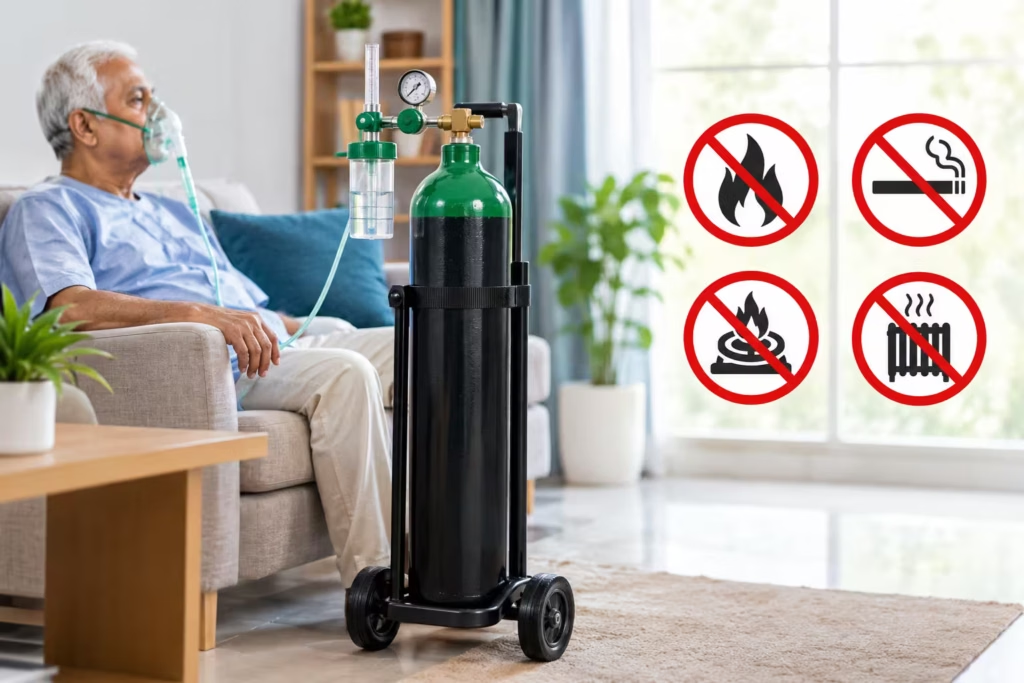
Image 1 suggestion: A medical oxygen cylinder secured upright in a home environment.
Image alt text: Oxygen Safety: Secure medical oxygen cylinder at home
2. Keep Oxygen Away from Fire and Heat
Keeping oxygen equipment away from flames and heat sources is one of the most important oxygen safety rules.
Keep the cylinder away from:
- Gas stoves and cooking flames
- Candles, incense, and oil lamps
- Cigarettes, matches, and lighters
- Heaters and fireplaces
- Sparks and other ignition sources
Follow the manufacturer’s instructions and local fire-safety guidance for the required separation distance. Never use oxygen equipment near an open flame.
3. Never Smoke Near Oxygen Equipment
Smoking near oxygen equipment creates a serious fire risk. A cigarette, match, or lighter can ignite clothing and nearby materials much more easily in an oxygen-enriched environment.
Keep the patient’s oxygen-use area completely smoke-free. This rule applies to family members, caregivers, and visitors.
Furthermore, place clear no-smoking signs where necessary. Explain the risks to everyone who enters the room so that they understand why this precaution matters.
For additional guidance, read the FDA’s oxygen therapy safety information.
4. Store the Cylinder in a Suitable Location
Choose a dry, well-ventilated location away from direct sunlight and excessive heat. The cylinder should not block doorways, hallways, or emergency exits.
Follow the manufacturer’s storage instructions and keep the equipment accessible for routine checks. Avoid placing it where it may be struck by furniture or other heavy objects.
Proper storage helps protect the cylinder from accidental damage and makes everyday use easier for caregivers.
5. Keep Oil and Grease Away
Never apply oil, grease, petroleum jelly, or unapproved lubricants to oxygen cylinder valves, regulators, or connections. These substances can create a serious hazard when exposed to oxygen under pressure.
Always use equipment designed for medical oxygen. If a valve or connection becomes difficult to operate, do not force it or attempt a repair yourself.
Instead, contact the supplier or a qualified technician for assistance.
6. Check the Regulator, Valve, and Tubing
Inspect the cylinder and its accessories regularly according to the manufacturer’s instructions. Look for damaged tubing, loose connections, cracked parts, or unusual sounds that may indicate a problem.
Never use damaged equipment or attempt to repair a cylinder valve yourself.
If you suspect an oxygen leak, keep away from ignition sources and move to a safe location if necessary. Do not operate electrical switches near the suspected leak. Contact the oxygen supplier or emergency services as appropriate.
You can also review this medical oxygen cylinder buying guide to learn what to consider when checking oxygen equipment.
7. Follow the Prescribed Oxygen Flow Rate
Always use oxygen at the flow rate prescribed by the patient’s healthcare professional. Do not increase, decrease, or stop oxygen therapy without medical advice.
The correct flow rate depends on the patient’s medical condition and treatment plan. A higher flow rate is not always better and may be inappropriate for some patients.
Caregivers should learn how to operate the equipment and understand the steps to take if the patient experiences breathing difficulties.
For more information, read the NHS guide to home oxygen treatment.
8. Keep Children and Pets Away
Children and pets may accidentally pull oxygen tubing, knock over a cylinder, or interfere with its controls.
Place the equipment in a protected location while keeping it accessible to the caregiver. Arrange the tubing carefully to reduce tripping risks, and keep small accessories out of children’s reach.
In addition, explain the basic oxygen safety rules to everyone in the household. Children should never operate oxygen equipment without appropriate adult supervision.
9. Move the Cylinder Carefully
Use a suitable cylinder trolley or carrying system when moving an oxygen cylinder. Never drag, drop, roll, or lift it by the regulator.
Follow the manufacturer’s instructions when preparing the cylinder for transport. Keep it properly secured and protect its valve from damage.
If you need a replacement cylinder or refill, contact your supplier before the current supply runs low. You can check the oxygen cylinder refill and service information to explore available options.
10. Prepare for Emergencies
Families should know what to do if the oxygen supply runs low, equipment stops working, or a cylinder becomes damaged.
Keep the supplier’s contact details readily available. Ask your healthcare professional about a suitable backup plan for interruptions in oxygen supply.
Never wait until the cylinder is empty before arranging a refill. Instead, monitor the remaining supply according to the equipment instructions and plan ahead.
If you need a temporary cylinder, review the oxygen cylinder rental options in Dhaka. Confirm current availability, rental duration, and package details before arranging a rental.
What Should You Do If an Oxygen Cylinder Leaks?
A suspected oxygen leak requires careful handling because oxygen can make nearby materials burn more intensely.
Follow these precautions:
- Keep everyone away from cigarettes, flames, sparks, and other ignition sources.
- Do not attempt to repair the valve, regulator, or cylinder yourself.
- Avoid operating electrical switches or equipment near the suspected leak.
- Move people to a safe location if the leak cannot be managed safely.
- Contact the supplier or local emergency services for assistance.
If a fire starts, leave the area and call the fire service. Never put yourself at risk by trying to move a cylinder during a fire.
How to Choose an Oxygen Cylinder for Home Use
When choosing an oxygen cylinder, consider the patient’s prescribed oxygen needs, cylinder capacity, storage requirements, and available accessories.
Also, ask the supplier about the regulator, flow meter, delivery arrangements, and refill process. Check the complete package before making a purchase.
You can compare available information on the oxygen cylinder price in Bangladesh page. For local delivery and service information, visit the oxygen cylinder service area page.
If you are deciding between purchasing and renting, read the oxygen cylinder rental price and package guide.
Choose equipment based on the patient’s medical needs and seek advice from a qualified healthcare professional before starting oxygen therapy.
Frequently Asked Questions
Is it safe to keep an oxygen cylinder at home?
Yes, an oxygen cylinder can be used safely at home when the equipment is appropriate and the user follows medical advice, manufacturer instructions, and fire-safety precautions.
Can I use a gas stove while using an oxygen cylinder?
Keep oxygen equipment away from cooking flames and other ignition sources. Follow the manufacturer’s instructions for safe placement and the required separation distance.
Should an oxygen cylinder be stored upright?
Follow the manufacturer’s storage instructions. If the cylinder requires upright storage, secure it with a suitable holder or stand to prevent it from falling.
Can I change the oxygen flow rate myself?
No. Use the prescribed flow rate and consult the patient’s healthcare professional before making any changes.
What should I do if my oxygen cylinder is damaged?
Avoid using damaged equipment if it is safe to stop, keep it away from ignition sources, and contact the supplier or a qualified technician. If you suspect a leak or immediate danger, move to a safe location and seek emergency assistance.
How can I reduce fire risks when using oxygen at home?
Keep the area smoke-free, avoid open flames, store the cylinder correctly, and keep oil and grease away from oxygen equipment. Make sure everyone in the household understands these precautions.
Final Thoughts
Following oxygen safety guidelines helps families reduce fire risks and handle medical oxygen equipment more responsibly. Secure the cylinder, keep it away from flames, inspect the equipment regularly, and always follow the prescribed oxygen flow rate.
Most importantly, ensure that every caregiver understands the safety instructions before operating the equipment. Proper preparation and regular checks can help create a safer environment for patients receiving oxygen therapy at home.
If you need an oxygen cylinder for home care, contact your supplier to confirm current product availability, delivery options, and refill arrangements before placing an order.
